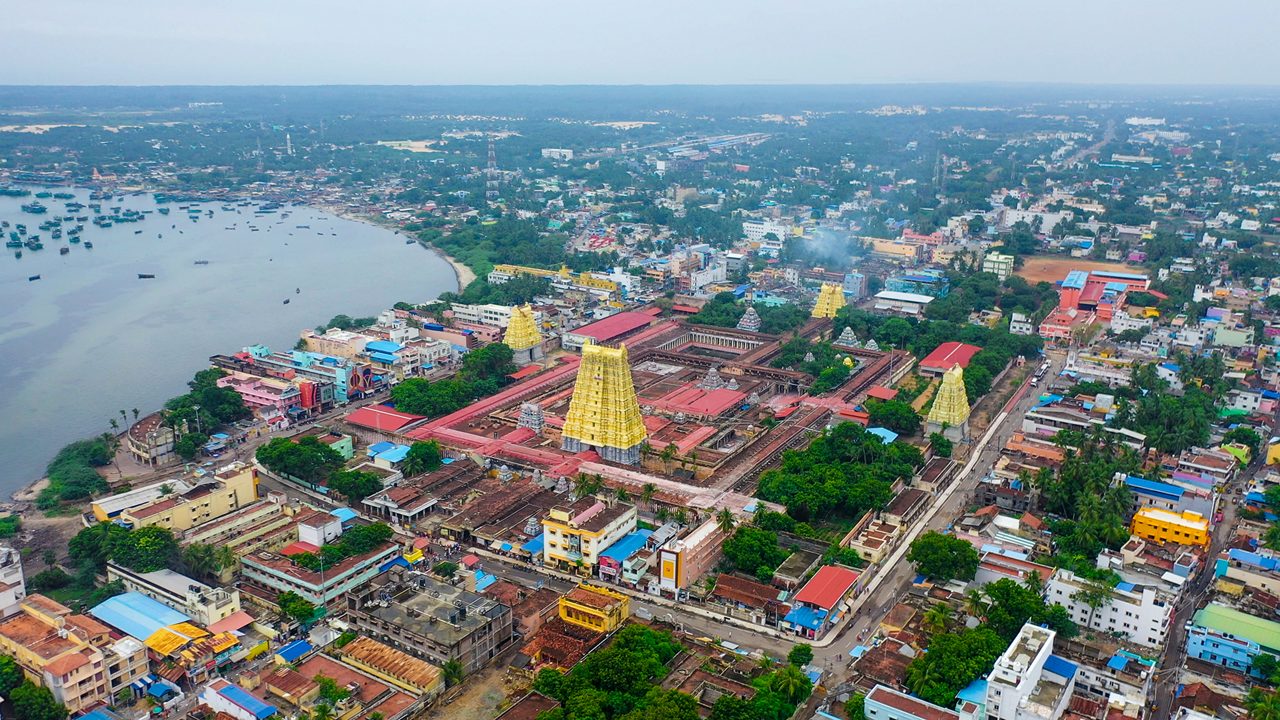
A lot of people visit Rameswaram the same way: arrive, do the temple, take a photo at the coastline, leave. It's an understandable rhythm if you're stitching it into a bigger Tamil Nadu trip, but Rameswaram rewards slowing down more than most places on that circuit, partly because of what's inside the temple, and partly because of what's roughly 20 kilometres past it, sitting quietly at the very tip of the mainland.
The temple corridors are the actual headline
Ramanathaswamy Temple gets talked about for its shrine, but the thing that actually stops people in their tracks is the corridor system, long pillared passageways running around the temple, built up over centuries, with the third corridor alone carrying over a thousand pillars. Walk it slowly and you notice the pillars aren't identical and different sections were added in different periods, including expansion work carried out well after the original structure.
Inside the temple, there are 22 theerthams - wells, each considered to have its own water and its own significance. The traditional practice is to bathe at each one in sequence as an act of purification before worship. If you're planning to do this, budget real time for it and it isn't a five minute stop, and doing it properly is part of what makes a Rameswaram visit feel different from a quick temple tick box.
As with most major Tamil Nadu temples, phone and camera rules apply in parts of the complex, and darshan windows shift around festival days and worth confirming at the entrance rather than assuming the schedule you read online still holds.
Then there's Dhanushkodi
Around 20 kilometres east of the temple town, the road runs out at what used to be a functioning port town. In 1964, a cyclone tore through the region and effectively wiped Dhanushkodi off the map and the ruins you can still walk through today, roofless buildings and a shell of a railway station, are what's left. It's genuinely one of the more affecting places in Tamil Nadu, not because of any single monument, but because you're standing in what was, within living memory, somewhere people actually lived.
Past the ruins, the land narrows to a point looking out toward Sri Lanka, with the shallow reef chain of Adam's Bridge visible under the water on a clear day. Getting there usually a local jeep, bus, auto and car up to the last stretch, and it's a daylight only trip, and the stretch out to the tip is best done well before evening, both because the light is what makes the place, and because road conditions along the coast can change fast with weather and tide. Check locally on the day rather than assuming the drive is the same in every season.
How to actually do the day
If you're only budgeting a half day for Rameswaram, you'll end up rushing one or the other and the temple corridors deserve unhurried time, and Dhanushkodi isn't a five minute photo stop either. If it fits your route, give the town a full day rather than a stopover. It's one of the destinations where our guides carry local knowledge of tide timing and road conditions that a map app simply won't tell you and the kind of detail that's the whole point of booking a Single Day Guide instead of driving out on your own.